The SHIFT
Operating Model — Strategy, Governance, Data, Change, and Wellbeing. Delivered as one system.
Most organizations fix these one at a time. A new strategy here, a governance review there, a change program that never sticks. The failure isn't in any single piece. It's in the gaps between them. SHIFT closes the gaps.
Workforce Management Strategy
Strategy that doesn't stop at the slide deck.
Enterprise-wide workforce management vision aligned to your care delivery model. Not a templated framework, but a strategy built for your operational reality.
How it works
- Sustainability Teams that bridge the implementation-to-operations gap
- Strategic frameworks proven at enterprise scale
- Alignment of technology, operations, and labor realities
- Post go-live support to ensure systems are used, not abandoned
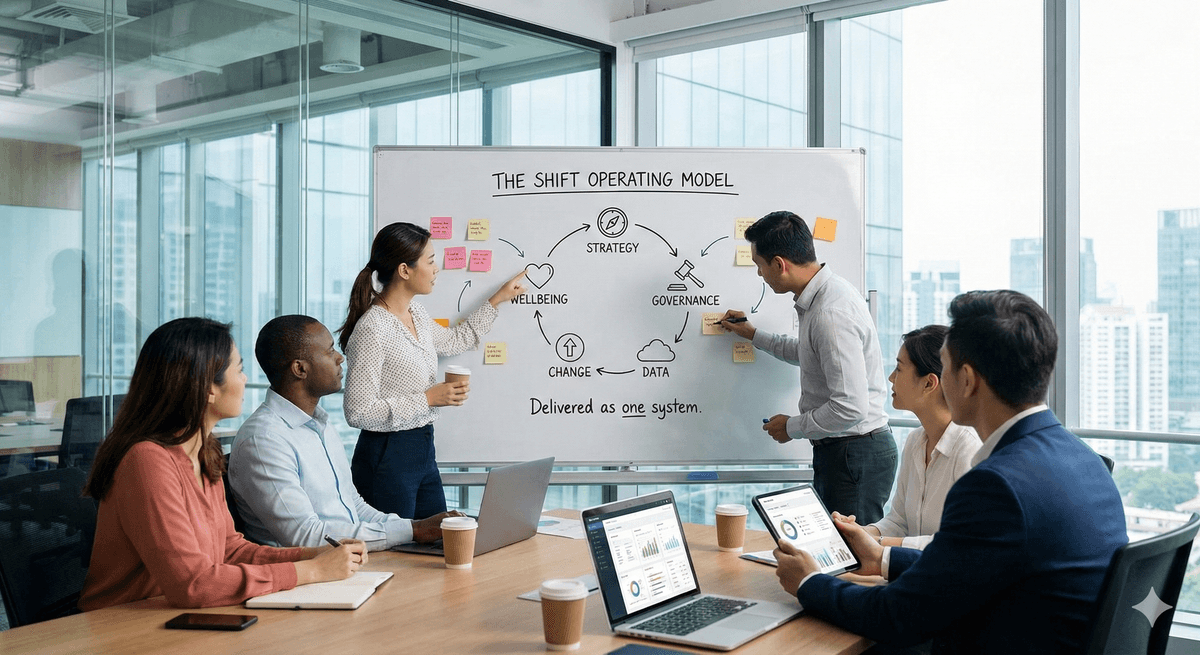
Most WFM strategies fail because they start with technology instead of strategy. We help you define the operating approach first, so you invest in the right tools and sustain value long after go-live.
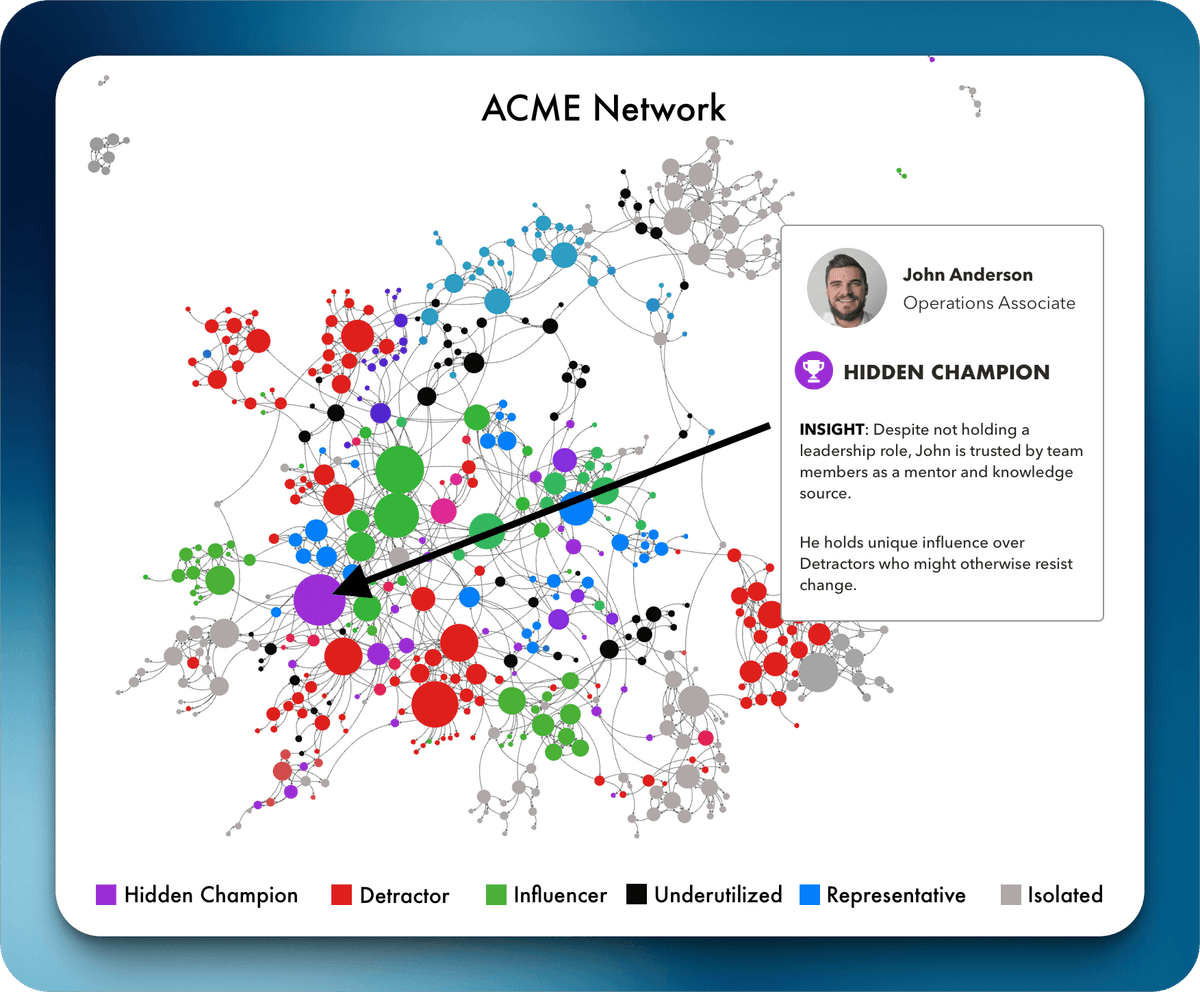
ONA visualizes the underlying hidden network of influence in your organization, that drives true change.
Governance Structure
The right people in the room, verified by data, not org chart guesswork.
Governance isn't about adding committees. It's about making sure the right decisions reach the right people at the right time. We use Organizational Network Analysis (ONA) data to verify that the people in your governance structure are actually the ones driving influence and information flow — not just the ones with the title.
How it works
- ONA-mapped influence networks to identify real decision-drivers
- Decision-rights audit across key workforce processes
- Committee architecture redesign with clear escalation paths
- Accountability framework with built-in signal monitoring
Data Insight
You can't build intelligence on ungoverned data.
We don't just build dashboards. We build the data governance layer that makes dashboards trustworthy. That means aligning definitions, cleaning sources, establishing ownership, and creating the feedback loops that keep data accurate over time — not just on launch day.
How it works
- Data definition alignment across HR, Finance, and Operations
- Source-of-truth mapping and ownership assignment
- KPI framework tied to strategy execution, not just activity
- Signal integrity monitoring — automated checks that flag when data quality degrades
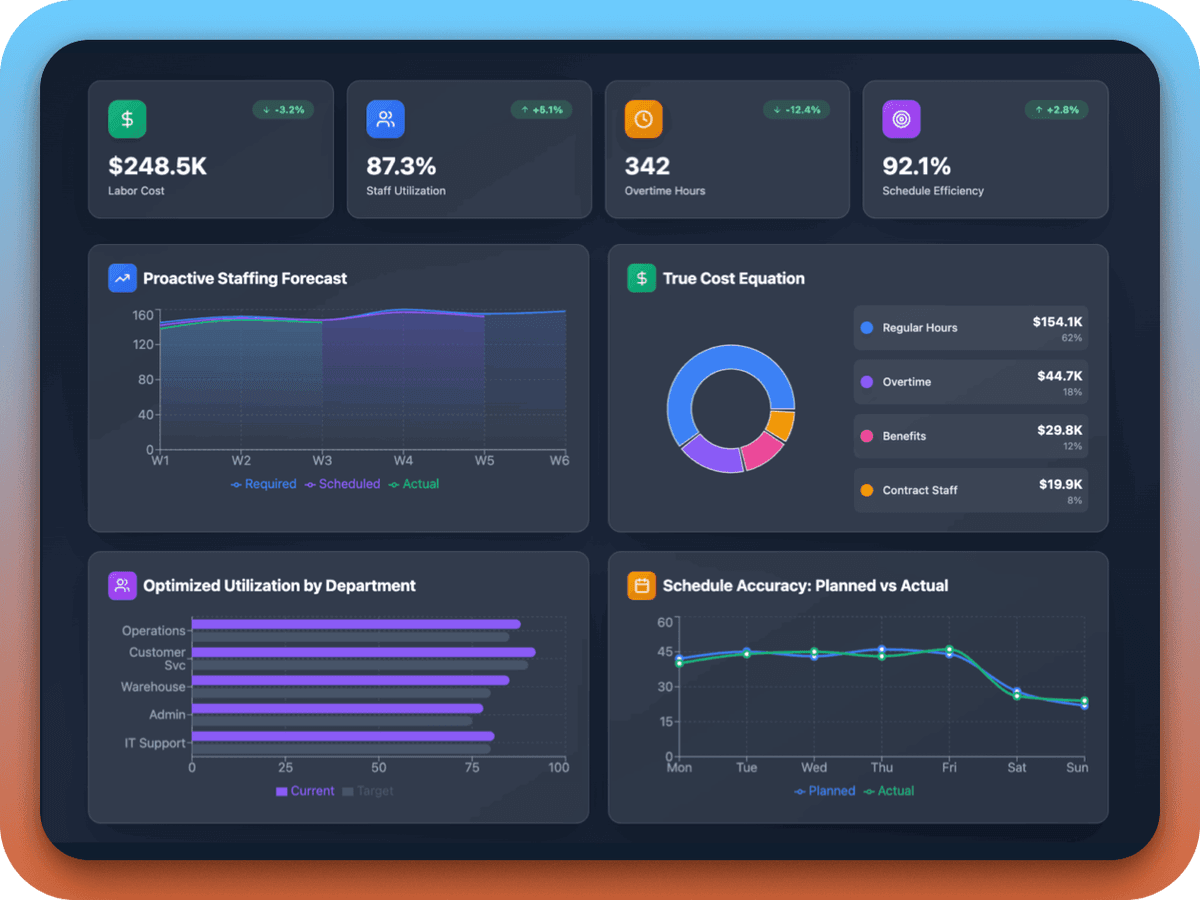
The problem isn't that you lack data. It's that your data lacks insight — so every function tells a different story and no one trusts the numbers.
Traditional metrics tell you what is happening (e.g. who is logging in?), but ONA tells you who is making it happen and where resistance is clustering
Change Management
Frontline adoption without adding meetings or burden.
Traditional change management treats adoption as a communications challenge. We treat it as a network challenge.
Using ONA, we leverage your trusted influencers to amplify your message and rally support through trusted voices.
Then we deploy Kim, our Intelligence Agent, to activate hidden champions, engaging passionate team members to energize and drive progress for your teams.
And neutralize your detractors to eliminate resistance and ensure smooth execution.
How it works
- 20-30% Higher Employee Engagement by leveraging ONA to target communications through trusted peer networks rather than just top-down channels leads to higher buy-in
- 10-15% Productivity Increase: ONA identifies collaboration bottlenecks that often derail change, allowing leaders to optimize workflows before they break
- Kim, our Intelligence Agent, engages 1:1 with frontline staff builds feedback loops that collect sentiment, provide real-time support, and surface resistance before it hardens
Staff Wellbeing
Wellbeing as an input, not a lagging indicator.
Most organizations treat wellbeing as a program — newsletters, wellness apps, appreciation weeks. We treat it as an operating input. Using ONA and real-time pulse data, we surface early warning signals of burnout, isolation, and overload before they show up in turnover numbers.
How it works
- ONA-based isolation and overload detection at the network level
- Pulse survey integration with real-time signal dashboards
- Workload distribution analysis tied to scheduling and governance
- Early warning system for burnout risk by team, role, and network position
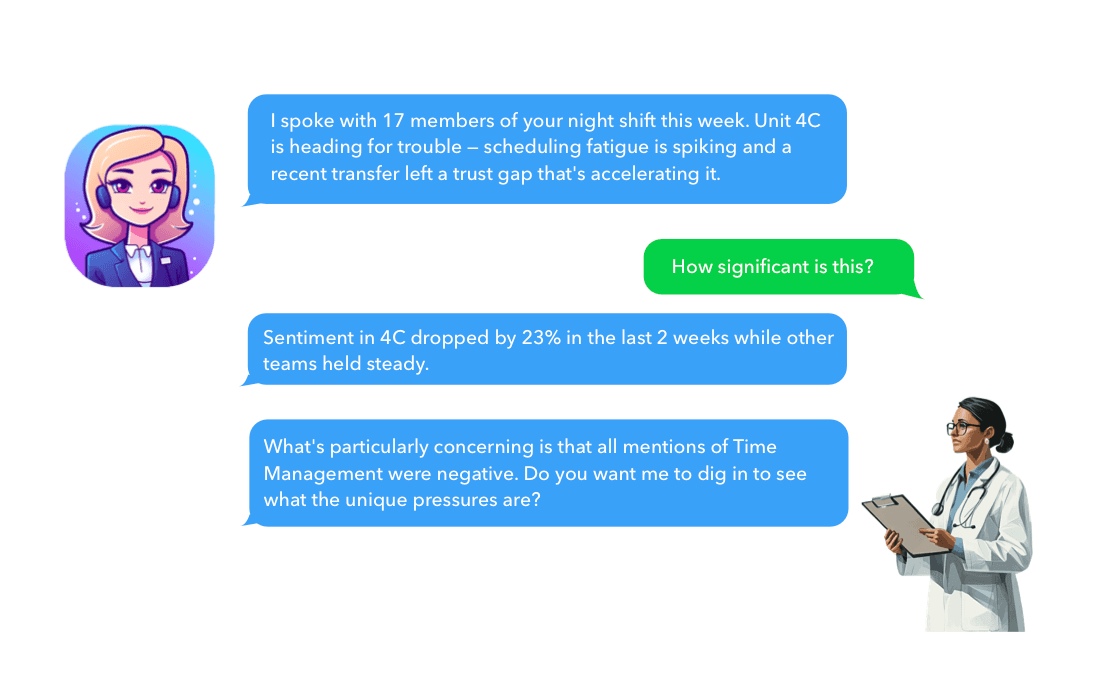
You cannot optimize a workforce that is burning out. And by the time engagement surveys catch it, the damage is already done.
SHIFT isn't a consulting framework. It's an operating model organizations are certified in.
We don't just optimize the plan. We optimize the people system that makes the plan happen. We call this operating model SHIFT.
Integrated by Design
Each pillar reinforces the others. Strategy informs governance. Governance structures data. Data powers change. Change protects wellbeing. Remove one, and the others degrade.
Certified, Not Just Advised
Organizations don’t just receive SHIFT recommendations — they are certified against the framework. This ensures the model is embedded into operations, not filed away in a slide deck.
Built to Sustain
SHIFT builds internal capability so the model keeps running without us. Your leaders learn the system, your governance embeds it, and your data validates it — continuously.
Organizations can engage with individual SHIFT pillars or deploy the full operating model. Every engagement is certified against the framework to ensure integration across all five dimensions.
See how SHIFT applies to your organization.
No sales theater. Just a conversation about what's actually breaking — and whether SHIFT is the right fit.